
Home / Privacy Statement
Privacy Statement
The Spanish National Research Council (CSIC) has a record of data processing activities. Data collected through this form will be incorporated and processed in the “Gestión de las actividades de producción y distribución de las publicaciones del CSIC” processing activity of Editorial CSIC in order to manage the requested service. It is the responsibility of Editorial CSIC to manage this record. If you wish to exercise your rights, please contact us through the postal address Vitruvio, 8, 28006 Madrid, Spain or e-mail address editorialcsic@csic.es. The data processing is legitimized by the consent of the person concerned. The data may not be transferred to third parties except in the cases provided for in current regulations on the protection of personal data. You have the right to file a claim with the Spanish Data Protection Agency. You have the right to withdraw your consent. If you wish to do so or to exercise your rights of access, deletion, rectification, limitation or portability, you can do so through this form. You can also contact the CSIC Officer for Data Protection via e-mail: delegadoprotecciondatos@csic.es

eISSN: 2253-797X
DOI: 10.3989/chdj
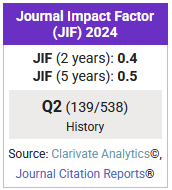
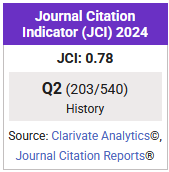
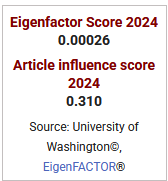
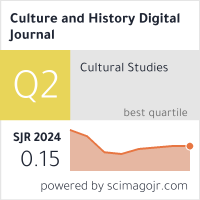
Indexing and quality






Plagiarism Detection Tool


Keywords

Most downloads (60 days)
1.O Engenho de açúcar: André João Antonil and the Anatomy of the Seventeenth-Century Brazilian Slave Plantation
2.Nostalgia and Tourism: Narratives of Yucatán’s Tangible Heritage
3.O The origins of casual culture: hooliganism and fashion in Great Britain
4.Linen, Silver, Slaves, and Coffee: A Spatial Approach to Central Europe’s Entanglements with the Atlantic Economy
5.The Philippine Islands: a vital crossroads during the first globalization period
6.Human Zoos or Ethnic Shows? Essence and contingency in Living Ethnological Exhibitons
7.The Uncertain Atlantic: African and European Transformations of São Tomé Island c. 1533
8.Crossed histories of the Honduran Caribbean: Republican urbanism and the banana Company town in Tela, 1876-1977
9.A controversial legacy from the Romantic period. Al-Andalus echoes in films featuring tourists (1905-1975)
10.New Directions in the History of Written Culture